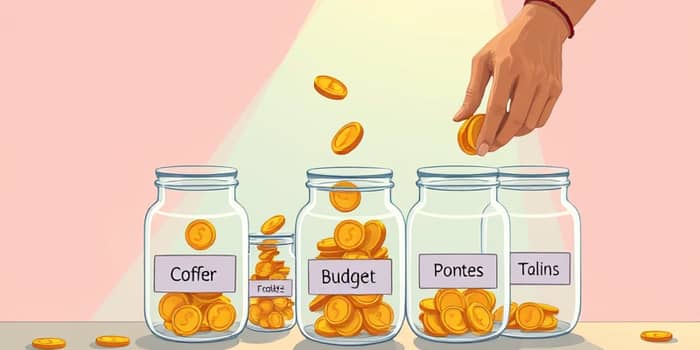
Imagine waking each month with a clear mission: every dollar in your wallet has a designated purpose, guiding you toward your dreams. Zero-based budgeting transforms this vision into reality, inviting you to reimagine your finances from the ground up.
Understanding Zero-Based Budgeting
Zero-based budgeting (ZBB) challenges the status quo by requiring you to build each budget from zero. Instead of tweaking last year’s numbers, you must justify every expense earns its place anew.
By assessing each cost on its own merits, ZBB ensures income minus expenditures equals zero, eliminating idle funds and fostering purpose-driven financial planning each cycle.
Origins: A Radical Approach
In the early 1970s, engineer Peter Pyhrr introduced ZBB at Texas Instruments to combat rising costs. He demanded that managers begin with a blank slate, scrutinizing every line item instead of paging through prior budgets. This shift handed accountability back to decision makers.
What began as a method to trim inefficiencies rapidly spread. Companies realized that by instilling a culture where hidden costs face open scrutiny, they could channel funds into high-impact areas and spark genuine innovation.
The Step-by-Step Journey
- Reset budgets to zero: Discard assumptions and build from a fresh slate of priorities.
- Identify activities: List functions aligned with your current goals.
- Justify each cost: Explain why each item matters and how it contributes value.
- Allocate funds based on need: Prioritize high-impact expenses; trim or eliminate the rest.
- Balance every dollar: Ensure total outflows match your full income.
Why ZBB Transforms Organizations and Lives
When embraced fully, ZBB becomes more than a method; it fosters a mindset of deliberate choice. Teams and individuals learn to scrutinize spending, driving toward mindful and strategic decisions every day.
- Cost Efficiency and Savings: Companies often reduce headcount or production costs by over 30%.
- Strategic Alignment: Resources follow your highest priorities, fueling growth.
- Accountability and Transparency: Justification of expenses strengthens trust across your organization.
- Flexibility and Adaptability: You can reallocate funds dynamically as needs shift.
- No Unassigned Funds: With clear roles for each dollar, overspending becomes nearly impossible.
Navigating the Challenges
Adopting ZBB demands time and commitment. Collecting data, conducting analyses, and holding thorough reviews can feel daunting at first.
- It can be labor-intensive in analysis and require new financial skills.
- Teams sometimes resist sweeping change, clinging to familiar routines.
Yet these hurdles are gateways to stronger habits. By training staff, deploying streamlined tools, and celebrating quick wins, you’ll transform resistance into momentum.
Real-World Applications and Variations
From small startups to global enterprises, ZBB frameworks adapt to varying scales. Nonprofits, governments, and households alike deploy ZBB principles to reclaim control of their finances.
Many leaders adopt a “near ZBB” approach—preserving certain baseline costs while rigorously evaluating discretionary spending. This hybrid model offers a smoother learning curve without sacrificing benefits.
Advanced software solutions such as Workday, Oracle, and specialized tools now automate much of the heavy lifting, delivering pinpoint financial clarity in real time and easing the path to adoption.
Case Study: Transforming Waste into Wealth
A mid-sized manufacturing firm implemented ZBB and achieved breakthroughs in just one year. By dissecting every department’s requests, they redirected funds toward innovation and customer service.
This dramatic shift underscores how targeted budget alignment unlocks resources for what truly matters.
Embracing Your Financial Future Today
Whether you’re leading a corporation or managing personal finances, zero-based budgeting offers a clear path to intentional living. Start by mapping one month of expenses, assigning each dollar a label, and reviewing the results.
Give every dollar a job. Experience how clarity sparks intentional decisions and fuels progress toward your most ambitious goals.
References
- https://www.workday.com/en-se/topics/fpa/what-is-zero-based-budgeting.html
- https://www.centier.com/resources/articles/article-details/money-101--traditional-budgeting-vs-zero-based-budgeting
- https://www.kepion.com/blog/what-is-zero-based-budgeting
- https://www.prophix.com/blog/zero-based-budgeting-pros-and-cons/
- https://www.prophix.com/blog/what-is-zero-based-budgeting-zbb/
- https://www.crosscountry-consulting.com/insights/blog/advantages-of-zero-based-budgeting-you-cant-ignore/
- https://www.ibm.com/think/topics/zero-based-budgeting
- https://paro.ai/blog/advantages-disadvantages-zero-based-budgeting/
- https://www.fidelity.com/learning-center/smart-money/zero-based-budgeting
- https://www.citizensbank.com/learning/what-is-zero-based-budgeting.aspx
- https://www.nerdwallet.com/finance/learn/zero-based-budgeting-explained
- https://www.oracle.com/performance-management/planning/zero-based-budgeting/
- https://opb.georgia.gov/budget-information/budget-documents/zero-based-budgeting
- https://www.youtube.com/watch?v=Ryn49zHaYcM