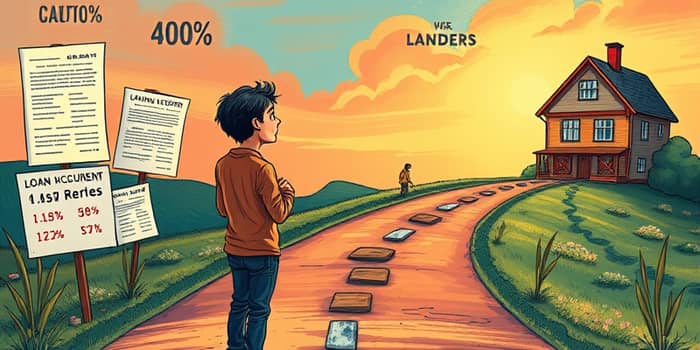
In today’s economy, record-high rejection rates reflect tightened lending standards and heightened caution among banks. While an approved loan may seem like an opportunity, certain offers can mask hidden risks. Understanding when to decline can safeguard your credit health and avoid dangerous debt traps.
This article examines market trends, red flags in loan offers, personal indicators to watch, and practical steps after a rejection. By the end, you’ll have a clear framework to decide when saying no is the best financial move.
Understanding the Current Lending Landscape
Over the past year, overall credit rejection rates climbed to 24.8%, the highest since 2014. Mortgage applications now face a 20.7% denial rate on average, and mortgage refinance rejections have soared to 25.6%. Even auto loans and credit cards suffer historically high declines.
These figures reflect banks’ response to intense economic uncertainty, rising inflation, and recession fears. When lenders tighten their criteria, consumer offers can carry stricter terms or hidden fees that increase long-term costs. Recognizing this context empowers you to approach every loan with a critical eye.
Identifying Red Flags in Loan Offers
Before accepting any credit offer, compare its terms against common reasons lenders reject applications. If your profile aligns with these red flags, the loan may be more trouble than it’s worth.
If an offer triggers any of these concerns—especially high interest rates and hidden fees—it may be wise to step back and reassess.
Personal Financial Indicators to Monitor
Your own financial profile can signal when a loan is a bad fit. Keep a close eye on:
- Debt-to-Income Ratio: Aim for under 36% of gross income.
- Credit Utilization Rate: Keep balances below 30% of credit limits.
- Number of Hard Inquiries: Space out applications to avoid score drops.
- Employment Stability: Document at least two years of steady income.
Monitoring these metrics helps you spot whether a lender’s terms align with your true capacity to repay. If you already exceed safe thresholds, saying no can prevent further strain on your finances.
After a Rejection: Next Steps
Loan rejection can feel discouraging, but it also offers valuable feedback. Under the Equal Credit Opportunity Act, you’ll receive an adverse action notice outlining specific denial reasons within 60 days.
- Review the Notice: Identify factors like income or credit score that need improvement.
- Pull Free Credit Reports: Check all three bureaus for errors and dispute inaccuracies.
- Reduce Debts Strategically: Target high-interest balances and maintain low utilization.
- Gather Income Documentation: Update pay stubs, tax returns, and employment records.
- Consider Alternatives: Smaller personal loans, credit unions, or peer-to-peer options.
Waiting six months before reapplying often yields better outcomes, as improvements take time to reflect on your credit report.
When to Walk Away
Not every loan offer is worth accepting. Walk away confidently if you encounter:
- Annual percentage rates exceeding 20%.
- Prepayment penalties or balloon payments.
- Unclear fee structures or hidden origination charges.
- Terms that require collateral beyond your comfort level.
Trust your financial metrics and the red-flag list above. Declining an unsafe loan today preserves creditworthiness, reduces stress, and prevents unexpected financial shocks down the road.
Building Strong Financial Health
Beyond loan decisions, long-term credit health relies on consistent habits. Automate bill payments to avoid late fees, maintain zero balances on low-interest cards, and build an emergency fund equal to three to six months of expenses.
Regularly reviewing your credit report and staying informed about market trends ensures you’re always prepared to make the best borrowing choices. As underwriting standards evolve, your proactive approach becomes your strongest financial defense.
Looking Ahead: 2025 and Beyond
While rejection rates may stabilize by 2026, credit standards will likely remain stringent. Housing lenders are already raising minimum credit scores, and leveraged loan terms continue to shift.
By learning when to say no, you position yourself to negotiate stronger terms or wait for more favorable market conditions. Ultimately, the ability to decline is as powerful as the ability to accept—a cornerstone of improve credit health and lasting financial resilience.
Remember: a well-timed no protects your future borrowing power and opens the way to walk away confidently until the right opportunity arises.
References
- https://nationalmortgageprofessional.com/news/mortgage-application-rejections-hit-decade-high
- https://www.experian.com/blogs/ask-experian/does-a-declined-loan-appear-on-your-credit-report/
- https://www.webull.com/news/13934696919426048
- https://www.credibly.com/incredibly/rejected-for-a-loan-do-these-9-things-right-now/
- https://www.emarketer.com/content/rejection-rates-new-credit-access-tick-upward-new-york-fed-data
- https://www.lendingclub.com/resource-center/personal-loan/what-to-do-if-you-are-declined-a-personal-loan
- https://www.fticonsulting.com/insights/reports/2026-leveraged-loan-market-survey
- https://www.consumerfinance.gov/ask-cfpb/my-credit-application-was-denied-because-of-my-credit-report-what-can-i-do-en-1253/
- https://www.federalreserve.gov/data/sloos/sloos-202601.htm
- https://www.bankrate.com/loans/personal-loans/what-to-do-if-you-are-denied-a-loan/
- https://www.newyorkfed.org/microeconomics/databank.html
- https://www.nationalfunding.com/blog/bank-rejected-loan-application/
- https://www.aeaweb.org/conference/2016/retrieve.php?pdfid=21362&tk=bsEYtFsd
- https://finaid.uccs.edu/types-of-aid/educational-loans/default15
- https://academic.oup.com/rfs/article-abstract/31/12/4912/4962209