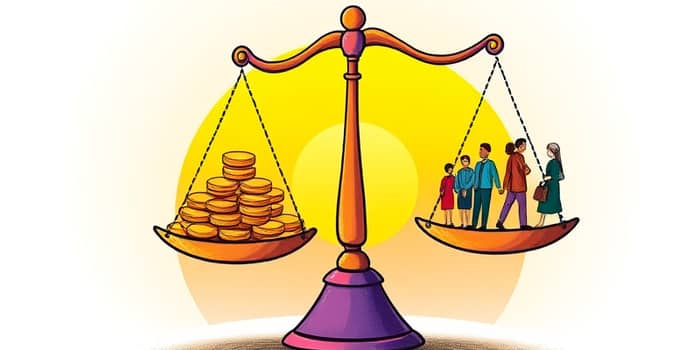
In recent years, wealth inequality has reached alarming levels both in the United States and globally. The top 1% of American households now control more than 31% of all national wealth, while the bottom 90% combined hold a similar share only in theory. Around the world, the richest 10% own over 75% of resident wealth, leaving the bottom half with just 2%. This chasm is driven by deeply entrenched economic, policy, and structural dynamics, which threaten not only social cohesion but also economic stability and environmental sustainability. Addressing this crisis requires both bold vision and targeted action across multiple fronts.
Understanding the Roots: Causes of Wealth Inequality
An examination of core drivers reveals that disparities in asset ownership and investment opportunities lie at the heart of modern inequality. As stock markets surge, fueled by AI-driven growth sectors, households with significant equity portfolios reap outsized gains. In contrast, many middle-class families see minimal appreciation in home values or retirement accounts.
Uneven wage growth compounds these gaps, as top earners see robust pay increases while middle- and lower-income workers struggle to keep pace. Mismatched tax policies, including declining top tax rates and preferential treatment of capital gains, further amplify concentration at the top. Structural features such as limited access to affordable credit, educational disparities, and global financial flows channeling resources toward wealthier nations deepen these divides.
- Asset and investment disparities: Rising stock prices reward those with financial portfolios, while real estate gains slow for most families.
- Unequal wage trajectories: High-income earners experience growth at more than double the pace of middle-income workers.
- Declining top tax rates and loopholes: Capital gains taxed below ordinary income create incentives for accumulation.
- Global financial system imbalances: Transfers of capital flow from developing to rich economies, entrenching advantage.
As history shows, these trends have been decades in the making. Since the late 1980s, deregulation, trade liberalization, and technological automation have disproportionately rewarded capital over labor. The pandemic-era K-shaped recovery further accelerated these disparities, as remote-work sectors thrived while in-person industries lagged.
The Far-Reaching Consequences of Growing Inequality
The effects of this skewed distribution extend far beyond bank balances. Economies with significantly reduced economic mobility struggle to sustain long-term growth, as talent and innovation among lower-income groups go untapped. Households burdened by high debt face limited capacity to invest in education or entrepreneurship, and rising inequality correlates with social unrest, diminished trust in institutions, and polarization.
Inequality also exacerbates environmental challenges. The wealthiest 10% of global residents are responsible for over 77% of emissions from private capital, a stark example of environmental and climate links tied to concentrated consumption patterns. Meanwhile, marginalized communities bear the brunt of climate impacts, despite their minimal contribution to the problem.
Political inequalities often follow economic ones. Billionaires are thousands of times more likely to influence policy, weakening democratic processes and steering legislation toward entrenched interests. In many regions, this dynamic perpetuates cycles of poverty, discrimination, and limited access to quality education or healthcare.
High inequality also harms public health. Research reveals that regions with wider divides endure poorer health outcomes, higher crime rates, and lower life expectancy. When inadequate social safety nets leave families vulnerable, stress accumulates into chronic illness, eroding the very fabric of communities.
Charting the Path Forward: Solutions for a Fairer Future
Tackling these challenges demands a multifaceted strategy. Policymakers, civil society, and private actors must collaborate to design measures that balance growth with fairness and sustainability. Below are key approaches to build a more equitable future.
- Progressive tax and redistribution reforms: Align capital gains with income tax rates, introduce financial transaction taxes, strengthen inheritance levies.
- Targeted wage and work supports: Raise minimum wages, expand earned income tax credits, ensure predictable scheduling, strengthen collective bargaining.
- Comprehensive asset-building and education: Auto-enroll employees in retirement plans, expand universal Pre-K, fully fund Pell Grants, subsidize apprenticeships.
- Universal healthcare and housing security: Establish affordable care programs, expand Medicaid, invest in public housing and infrastructure jobs.
- Systemic and oversight measures: Tighten financial regulation, close tax loopholes, limit political lobbying, enforce anti-discrimination laws.
- State-level initiatives: Adopt state-level Earned Income Tax Credits, reject regressive tax cuts, invest in community-driven economic development.
Global cooperation must complement domestic reforms. Efforts like a unified minimum corporate tax and transparent corporate ownership registries can curb tax evasion and ensure that wealth generated across borders benefits all societies. This systemic and oversight measures fosters accountability and financial integrity worldwide.
Realizing these solutions will require sustained commitment and popular mobilization. By embracing policies that promote shared prosperity, we can create an economy where opportunity is not predetermined by birth but accessible to all. Collective action, informed public debate, and bold leadership can transform our systems, reduce inequality, and ensure a healthier, more resilient planet for generations to come.
References
- https://www.cbsnews.com/news/us-wealth-gap-widest-in-three-decades-federal-reserve/
- https://belonging.berkeley.edu/six-policies-reduce-economic-inequality
- https://www.socialjustice.ie/article/world-inequality-report-2026
- https://www.clasp.org/press-room/news-clips/10-solutions-fight-economic-inequality/
- https://wir2026.wid.world/insight/global-economic-inequity/
- https://keough.nd.edu/news-and-events/news/effective-policies-for-addressing-economic-inequality/
- https://www.oxfam.org.uk/get-involved/campaign-with-oxfam/fight-inequality/oxfams-global-inequality-report/
- https://siepr.stanford.edu/publications/policy-brief/policy-cocktails-attacking-roots-persistent-inequality
- https://wir2026.wid.world
- https://www.worldeconomics.com/Rankings/Economies-By-Inequality.aspx
- https://democrats-financialservices.house.gov/issues/narrowing-the-wealth-gap.htm
- https://www.oxfamamerica.org/explore/issues/economic-justice/inequality-in-the-us/
- https://education.cfr.org/learn/learning-journey/forms-government-change/what-is-economic-inequality