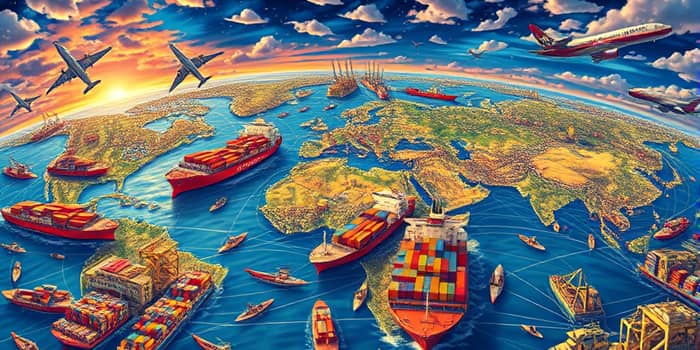
Global trade agreements are more than diplomatic achievements—they shape industries, communities, and the very future of economies around the world. By cutting tariffs, redefining rules of origin, or opening new markets, these pacts create clear winners who gain export advantages, those on the losing end, and a series of missed opportunities waiting to be seized.
As we stand in 2026, the landscape of trade deals—from the freshly inked U.S.-Indonesia pact to the ongoing USMCA review and sweeping EU negotiations—demands both reflection and action. This article explores who has benefitted, who has suffered, and how businesses and policymakers can turn potential into performance.
Unveiling the Winners
Trade agreements have delivered export gains in energy, agriculture and critical industries. The U.S.-Indonesia deal finalized in February 2026 stands out: Indonesia scrapped tariffs on 99% of U.S. goods, paving the way for $15 billion in U.S. energy sales, $13.5 billion for Boeing aircraft, and $4.5 billion in agriculture exports. Meanwhile, Freeport-McMoRan’s Grasberg mine expansion secures $10 billion annually in copper revenues.
The USMCA partnership has been another triumph. With over 90% tariff-free North American trade and auto content rules raised to 62.5% regionally, manufacturers and parts suppliers across the U.S., Canada, and Mexico enjoy stronger supply chains and stable rules.
Other beneficiaries include:
- Japan and Korea, which leveraged U.S.-China tariff tensions to expand market share.
- Brazil, enjoying a modest 10% global tariff baseline compared to higher rates elsewhere.
- South Africa’s wine producers, who found new outlets amid Europe's complex negotiations.
These successes underscore how strategic negotiations unlock lasting growth when countries identify mutual strengths and focus on key sectors.
Recognizing the Losers
Not all participants reap benefits. China’s massive trade surplus made it a target of 145% U.S. tariffs at the peak of the trade war, while export controls from Beijing created uncertainty for technology firms. India faced similar penalties, affecting its textiles and pharmaceuticals industries.
Within the EU sphere, France’s wine exporters felt pressure from evolving agreements, and New Zealand’s wool sector struggled as global buyers diversified sources. Even Canada and Mexico saw 15–16% of non-exempt trade subjected to lingering tariffs during U.S. tariff pauses.
These examples demonstrate how uneven policy shifts can disrupt growth and why stakeholders must prepare for regulatory swings that may hit sensitive sectors hardest.
Missed Opportunities and Underexplored Territories
While some deals closed successfully, others remain in limbo. The Mercosur agreement between the EU and South American bloc lingers in ratification, delaying access for agribusinesses and automakers. Similarly, negotiations with the Philippines, UAE, and further EU modernization in North Africa are stalled, constraining potential gains in emerging markets.
Geopolitical friction adds further complexity. As Asia and Europe diversify supply chains away from any single partner, the proposed 10% global tariff baseline by countries like Brazil and Australia signals shifting competitive rules. Without proactive engagement, businesses may see strategic corridors left underutilized and markets slip away.
Strategies for Thriving in a Dynamic Trade Landscape
To navigate this complex environment, businesses and policymakers must adopt a proactive stance. Here are practical steps to turn challenges into catalysts for growth:
- Diversify market portfolios beyond traditional partners to mitigate geopolitical risks.
- Invest in supply chain resilience by sourcing materials across multiple regions.
- Engage in ongoing policy dialogue to influence renegotiations like USMCA and pending EU deals.
- Leverage data analytics to identify emerging consumer trends and tariff impacts.
- Build strategic alliances with industry peers to share resources and market intelligence.
Implementing these strategies requires commitment but can deliver long-term competitive advantages and safeguard against sudden policy reversals.
Looking Ahead: Charting a Resilient Future
As we approach key deadlines—USMCA review in mid-2026 and U.S.-China tariff exclusions ending in November 2026—stakeholders must remain agile. Anticipating policy moves and identifying future growth corridors will define which economies and companies emerge stronger.
By learning from past winners and losers, and by seizing underexplored opportunities, governments and businesses can transform trade agreements from static documents into engines of innovation, sustainability, and shared prosperity. The journey ahead may be fraught with negotiations and geopolitical shifts, but with informed action, the next wave of trade pacts can deliver unprecedented benefits for all.
References
- https://www.globaltrademag.com/global-trade-outlook-and-international-economic-forecasts/?gtd=3850&scn=
- https://www.whitehouse.gov/fact-sheets/2026/02/fact-sheet-trump-administration-finalizes-trade-deal-with-indonesia/
- https://www.tecma.com/usmca-trade-accord/
- https://kpmg.com/us/en/articles/2026/global-trade-outlook-2026.html
- https://www.troweprice.com/en/us/insights/losers-and-relative-winners-of-trumps-shapeshifting-tariff-war
- https://policy.trade.ec.europa.eu/eu-trade-relationships-country-and-region/negotiations-and-agreements_en
- https://www.youtube.com/watch?v=rm_7OgijrvU
- https://unctad.org/publication/global-trade-update-february-2026-who-wins-when-trade-policies-shift
- https://unctad.org/news/who-wins-and-who-loses-trade-policies-shift
- https://www.cfr.org/articles/trade-trends-watch-2026
- https://www.clevelandfed.org/publications/economic-commentary/2019/ec-201915-winners-and-losers-from-trade
- https://www.hinrichfoundation.com/research/article/trade-governance/four-trade-trends-to-watch-in-2026
- https://www.youtube.com/watch?v=auPhbmprcYw
- https://en.wikipedia.org/wiki/2025%E2%80%932026_United_States_trade_war_with_Canada_and_Mexico