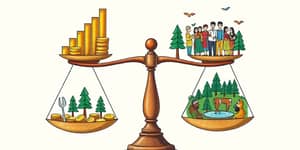
We often hear about booming stock markets or record-high home prices, but what do these asset surges mean for everyday consumers? The wealth effect captures this phenomenon, showing how perceived changes in personal or household wealth drive shifts in spending habits, savings rates, and broader economic activity.
By unpacking the dynamics of the wealth effect, individuals can navigate financial cycles with greater confidence, while policymakers can fine-tune strategies to sustain growth without stoking instability. This article explores the core concepts, historical examples, practical takeaways, and future outlook of this powerful economic channel.
Understanding the Wealth Effect
The term “wealth effect” originates from Keynesian economics, describing how increments in net worth translate into higher consumption. When households witness asset values rising—whether through share price rallies or property appreciations—they often feel comfortable increasing their discretionary spending. This behavior hinges on two intertwined factors: psychology and liquidity.
On the psychological front, increased paper wealth boosts consumer confidence. Homeowners gazing at a higher valuation may treat it like real money, even without liquidating. Similarly, rising portfolios foster a sense of security, prompting purchases of appliances, vacations, or higher-end goods.
Practically, consumers can convert illiquid assets into cash via refinancing or home equity loans. Credit-constrained households especially benefit from tapping into property gains rather than dipping into savings. The newfound liquidity often ends up in retail or services, further stimulating aggregate demand.
Income effects also play a role: dividends from stocks, rental incomes from real estate, or interest flows from bonds add to spending power. At the same time, banks become more willing to lend when collateral values climb, reinforcing the spending surge.
- Perceived versus actual wealth shifts alter preference between inferior and luxury goods.
- Liquidity channels such as home equity loans or refinancing options unlock consumption potential.
- Ongoing income streams from assets strengthen long-term spending capacity.
- Enhanced confidence stimulates borrowing and enhance risk-taking spending behavior.
Why it Matters Today
Asset price booms have punctuated recent history. In the 1990s, equity valuations soared during the technology boom, fueling unprecedented consumer jubilation. Yet, the marginal propensity to consume from stocks ranged only around three to four cents per dollar, reflecting a modest short-term impulse.
During the post-Great Recession recovery, housing wealth lifted but concentrated among high-income homeowners. This skewed distribution resulted in a muted overall spending rebound, despite sizeable asset gains. Economists attribute this to a lower marginal propensity to consume among wealthy households, whose additional wealth carries diminishing consumption value.
The COVID-19 pandemic offers another vivid illustration. Stimulus checks boosted savings, but simultaneous surges in equity and crypto markets drove household net worth to record levels. Studies estimate that approximately one-third of U.S. consumption growth during the recovery stemmed directly from this wealth effect.
More recently, with the S&P 500 up over twenty percent year-on-year and housing at fresh highs, net worth topped $169 trillion in Q3 2024. Yet rising inequality means the bulk of these gains landed with the top twenty percent of households, dampening the average consumption response.
These figures highlight the nuances: equities often yield higher short-term consumption effects than housing, and overall wealth spikes drive significant spending but unevenly across demographics.
Practical Insights for Consumers
Armed with a grasp of the wealth effect, you can make more informed financial choices. Remember that asset gains do not guarantee permanent income. Market corrections can swiftly reverse paper profits, affecting spending capacity and credit availability.
Here are actionable strategies to harness the wealth effect responsibly:
- Build a diversified portfolio to ride market cycles prudently while distributing risk.
- Consider refinancing or home equity lines sparingly, prioritizing long-term financial stability planning over temporary spending spikes.
- Automate savings and emergency funds so that liquidity needs do not force hasty asset sales during downturns.
- Allocate a portion of windfalls to income-generating assets, ensuring future cash flows and smoothing high-volatility consumption patterns.
By balancing consumption with reinvestment, you transform volatile gains into lasting financial resilience.
Policy Implications and Future Outlook
For central banks and fiscal authorities, the wealth effect serves as both an accelerant and a warning. Rising asset values can lift GDP through consumption, but they may also stoke financial imbalances. Policymakers must weigh the trade-off between supporting markets and safeguarding equitable outcomes.
Moreover, as wealth concentration intensifies, the aggregate spending response to asset shocks diminishes. When gains accrue predominantly to the highest net-worth households, the average marginal propensity to consume falls, weakening the effectiveness of monetary stimulus.
Looking ahead, novel asset classes such as cryptocurrencies, tokenized real estate, and digital art markets could reshape the landscape. Their high volatility may amplify confidence swings, while AI-driven investment platforms democratize access to asset markets, potentially broadening the wealth effect’s reach.
Ultimately, the wealth effect underscores a fundamental truth: financial markets and household consumption are deeply intertwined. By mastering its dynamics, consumers can ride asset tides with purpose, and policymakers can craft frameworks that channel wealth gains into inclusive economic growth.
References
- https://fiveable.me/key-terms/principles-econ/wealth-effect
- https://www.retaildogma.com/wealth-effect/
- https://www.federalreserve.gov/econres/notes/feds-notes/wealth-heterogeneity-and-consumer-spending-20250805.html
- https://www.economicshelp.org/blog/140745/economics/the-wealth-effect/
- https://www.oxfordeconomics.com/resource/us-consumers-still-riding-the-wealth-effect-coattails/
- https://www.marketplace.org/story/2026/01/15/how-the-wealth-effect-is-shaping-the-economy
- https://www.brookings.edu/articles/wealth-effects-and-the-changing-economy/
- https://en.wikipedia.org/wiki/Wealth_effect
- https://www.nber.org/digest/aug19/new-estimates-stock-market-wealth-effect
- https://www.nationwide.com/financial-professionals/blog/markets-economy/articles/how-much-is-the-wealth-effect-propping-up-economic-growth
- https://ritholtz.com/2025/10/revisiting-the-wealth-effect/