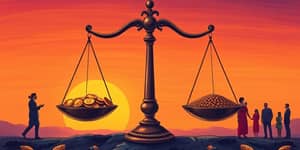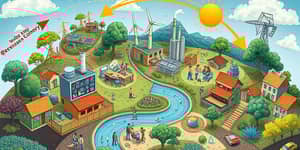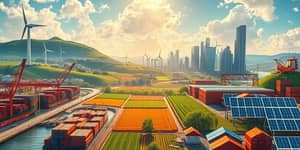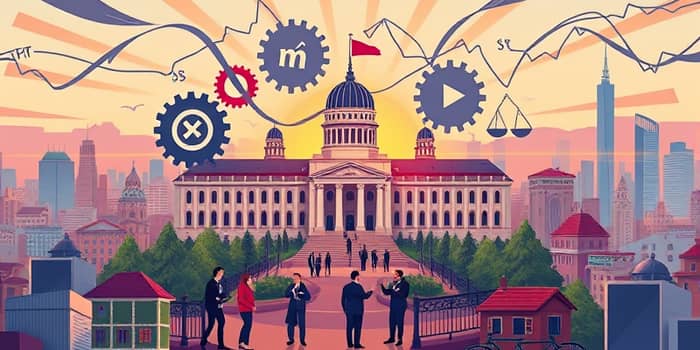
Political economy sits at the crossroads of society’s most important questions: who controls resources, how policies shape outcomes, and why some communities thrive while others struggle. By examining the complex dance between markets, governments, and people, we gain insight into steering our world toward shared prosperity.
Whether you are a student, policymaker, entrepreneur, or engaged citizen, understanding political economy equips you to navigate global challenges with informed, strategic choices.
Understanding Political Economy
At its essence, political economy studies the interactions of production, trade, law, government, custom, and public policy. It asks:
- How do states balance public welfare with private enterprise?
- What drives the distribution of wealth and power?
- How can competing groups secure finite resources?
Through frameworks drawn from economics, political science, and sociology, scholars and practitioners analyze these questions, often using game theory to model strategic competition for scarce resources.
A Journey Through History
From its 18th-century roots in moral philosophy, political economy evolved as thinkers explored how governments manage state wealth and allocate resources. Early figures laid the groundwork:
- Niccolò Machiavelli: power, statecraft, and civic virtue
- François Quesnay: the Physiocrats’ vision of natural order
- Adam Smith: the invisible hand and market efficiency
- Karl Marx: class struggle and surplus value critique
- John Maynard Keynes: government intervention in recessions
In the 20th century, debates shifted to interactions between belief systems and policy, birthing the “new political economy” that treats ideas as dynamic forces in their own right.
Key Components and Influences
Political economy blends diverse elements to explain societal outcomes:
- Power and interests: How capital, labor, and elites drive policy decisions.
- Ideas and ideology: The role of values in shaping economic agendas.
- Institutions and rules: Constitutions, legal frameworks, and incentives.
These factors determine who gets what, when, how, and why, influencing markets, taxation, regulation, and monetary policy.
Comparative Ideologies
Different systems propose distinct paths to prosperity. The following table highlights core traits and outcomes under major ideologies:
Global Perspectives and International Political Economy
On the world stage, economic and political forces intertwine. International political economy examines:
Trade agreements, financial flows, and diplomatic ties, as seen when an oil embargo transforms geopolitical landscapes overnight. Institutions like the WTO, IMF, and regional blocs reflect cooperation and competition among sovereign states.
Understanding these global dynamics helps explain why some nations experience rapid growth while others face persistent crises.
Practical Applications and Career Paths
Political economy offers actionable insights for real-world challenges. Practitioners use its tools to craft policies that balance efficiency with fairness and to:
- Analyze fiscal and monetary strategies for economic stability
- Design social programs that address inequality
- Advise businesses on navigating regulatory landscapes
- Shape diplomatic efforts in trade negotiations
Whether you pursue roles in government, international organizations, think tanks, or the private sector, a grounding in political economy provides the lens to guide informed decision-making in society.
Toward a Prosperous Future
As the world grapples with climate change, digital disruption, and widening inequality, political economy offers hope. By decoding the forces that drive policy and markets, we can design systems that foster innovation, protect vulnerable communities, and promote sustainable growth.
Embracing a mindset that values both freedom and collective well-being empowers you to become an agent of change—crafting solutions that uplift societies and secure lasting prosperity.
Your Next Steps
Begin your journey by studying foundational texts, engaging with interdisciplinary research, and participating in policy discussions. Seek mentorship, join professional networks, and apply theory to practical projects in your community.
Through dedication and collaboration, each individual can contribute to crafting a political economy that champions both opportunity and justice. The future of power, policy, and prosperity is in our hands.
References
- https://corporatefinanceinstitute.com/resources/economics/political-economy/
- https://www.youtube.com/watch?v=cRyYB265tX8
- https://universidadeuropea.com/en/blog/political-economy-meaning/
- https://www.ebsco.com/research-starters/economics/political-economy
- https://www.britannica.com/money/political-economy
- https://www.gov.harvard.edu/undergraduate/programs-of-study/political-economy/
- https://www.masterclass.com/articles/political-economy