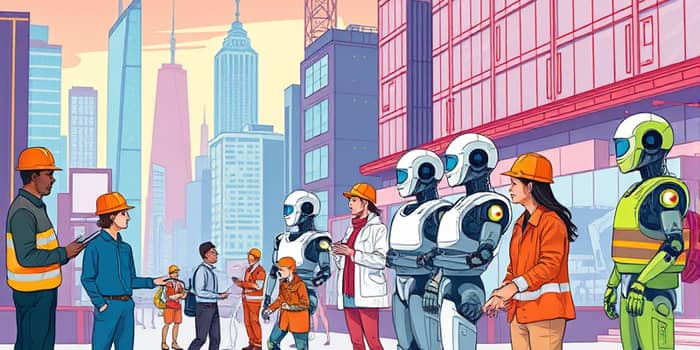
In an era where algorithms learn at astonishing speed and machines demonstrate creative abilities once thought uniquely human, workers around the globe are facing a crossroads. The rapid advance of automation technologies is reshaping industries, altering career trajectories, and redefining the very notion of work. While uncertainty and disruption dominate headlines, an opportunity also emerges for individuals, organizations, and societies to collaborate in crafting a future that values human ingenuity alongside machine efficiency.
Consider Maya, a legal assistant who saw her tasks streamlined by generative AI. Initially alarmed, she enrolled in data privacy courses and transitioned into a compliance specialist role, doubling her income within two years. Her story illustrates how proactive reskilling can transform potential displacement into career advancement and renewed purpose.
By understanding the magnitude of change and embracing strategies to adapt, every worker can transform potential threats into catalysts for growth. The narrative of decline need not become a self‐fulfilling prophecy; through preparation, resilience, and optimism, we can steer toward a future that uplifts communities and fosters innovation.
Understanding the Scale of Disruption
Mounting evidence suggests that by 2030, automation and generative AI will profoundly reshape labor markets. In the United States alone, researchers estimate a 6.1% of US jobs lost, equating to over 10 million positions. Globally, up to 92 million jobs could disappear, representing roughly eight percent of current employment. These figures highlight how swiftly the landscape can shift when machines transition from assisting workers to performing tasks autonomously.
Moreover, an additional 60 percent of existing roles may experience significant changes at the task level, requiring workers to recalibrate how they allocate time between routine operations and more complex problem‐solving. This shift underscores how partial automation can be just as transformative as full displacement.
Unlike previous automation waves that caused mainly cyclical layoffs, modern AI adoption tends to produce structural and permanent changes in workforce composition. This reality demands a proactive response, as the disruptions we face today will not self‐correct when economic headwinds ease.
Who Is Most Vulnerable?
Certain professions stand at the forefront of automation risk due to their repetitive, rule‐based nature. Machine learning models excel at analyzing data, recognizing patterns, and executing predetermined instructions—capabilities that erode the demand for human labor in specific sectors. Meanwhile, occupations reliant on creativity, social intelligence, and strategic oversight remain more insulated from full automation.
- Computer programmers
- Accountants and auditors
- Legal and administrative assistants
- Customer service representatives
- Telemarketers and copy editors
Sectoral projections reveal steep declines: bank tellers may face a 15 percent drop, cashiers an 11 percent reduction, and customer service roles a five percent slide over the next decade. By contrast, fields like healthcare administration and advanced engineering continue to grow at or above pre‐automation levels.
These contrasts highlight where workers should focus retraining efforts and where educational institutions can direct resources to meet evolving demand.
The Promise of New Opportunities
Amid the wave of disruptions, automation also spawns fresh avenues for employment and value creation. The World Economic Forum projects 170 million new jobs globally by 2030, driven by sectors such as AI development, robotics maintenance, and data analysis. This net gain of 78 million positions—after accounting for displaced roles—signals that innovation can generate as much as it dismantles, provided stakeholders remain proactive.
Goldman Sachs further observes that the initial displacement may be transitory as new job opportunities created by technology ultimately put people to work in other capacities. Roles in digital ethics, algorithmic auditing, and human‐machine interface design are emerging faster than traditional metrics can capture.
Moreover, generative AI holds the potential to boost labor productivity by approximately fifteen percent in developed markets, unlocking capital for reinvestment, improving product quality, and accelerating research breakthroughs. These productivity gains, when managed thoughtfully, can underwrite higher wages and foster job growth in emerging fields.
Preparing for Change: Practical Strategies
To seize these opportunities, workers and employers alike must commit to continuous learning and skills development. The half-life of technical knowledge is shrinking, making periodic upskilling essential to stay relevant. Individuals should identify which competencies align with growing industry demands and allocate time for structured learning, whether through certification programs, online courses, or hands-on projects.
- Invest in digital literacy and technical training
- Develop creative and interpersonal strengths
- Seek cross‐disciplinary experience to increase adaptability
- Engage in mentoring and collaborative networks
Surveys indicate that nearly thirty percent of US workers fear their jobs will be replaced by AI by 2029, while twenty-seven percent believe automation will elevate unemployment in high-income countries. Addressing this anxiety requires open dialogue, mental health support, and transparent roadmaps for upskilling pathways.
Building a Resilient Future
Resilience hinges on the alignment of individual ambition, corporate responsibility, and policy frameworks. Workers are encouraged to maintain a growth mindset, embracing tasks that push boundaries and honing skills where machines fall short, such as ethical judgment, emotional intelligence, and cross-cultural communication. Simultaneously, businesses must invest in workforce transformation rather than resorting to short-term layoffs, recognizing that long-term competitiveness depends on a skilled, adaptable talent pool.
- Advocate for accessible reskilling programs
- Promote public-private workforce partnerships
- Support safety nets that enable career transitions
- Embrace flexible work models and remote collaboration
Governments are piloting initiatives such as wage insurance, universal digital vouchers, and apprenticeship tax credits to smooth transitions. By shaping incentives that reward continuous improvement, stakeholders can ensure automation serves as a multiplier of human potential rather than a force of displacement.
Actionable Tips for Individual Workers
Every professional can take concrete steps today to fortify their career paths and harness the wave of technological change. Begin by conducting a thorough skills audit—compare your current capabilities against emerging job descriptions and identify gaps that require attention. Next, explore microcredentials in areas like AI ethics, data visualization, or human‐centered design to enhance your unique value proposition.
- Audit your skill set against industry demands
- Enroll in specialized online courses
- Network across diverse professional communities
- Cultivate a growth mindset and adaptability
Consider the example of a marketing specialist who embraced data analytics training. Within a year, she transitioned to a business intelligence role, combining creativity with quantitative insight. Stories like hers demonstrate how adapt and thrive in change is not just a slogan but a practical roadmap.
Conclusion
The journey toward a future where machines and people collaborate harmoniously is paved with both challenges and possibilities. While the specter of job displacement is real, so too is the chance to reshape work for the better. By combining innovative policy, visionary leadership, and transformative power of generative AI, we can craft an economy that rewards creativity, ensures equitable opportunities, and empowers every individual to thrive.
Now is the moment to act. Seek out learning opportunities, advocate for supportive policies, and embrace the mindset of continual growth. Together, we can turn uncertainty into a driving force for progress, ensuring that the future of work becomes a shared success story.
References
- https://www.brookings.edu/articles/robotization-and-occupational-mobility/
- https://www.forrester.com/blogs/ai-and-automation-will-take-6-of-us-jobs-by-2030/
- https://www.goldmansachs.com/insights/articles/how-will-ai-affect-the-global-workforce
- https://www.nu.edu/blog/ai-job-statistics/
- https://explodingtopics.com/blog/ai-replacing-jobs
- https://www.brookings.edu/articles/measuring-us-workers-capacity-to-adapt-to-ai-driven-job-displacement/
- https://joshbersin.com/2025/12/yes-ai-is-really-impacting-the-job-market-heres-what-to-do/
- https://www.imf.org/en/blogs/articles/2026/01/14/new-skills-and-ai-are-reshaping-the-future-of-work
- https://www.nexford.edu/insights/how-will-ai-affect-jobs
- https://www.gsdcouncil.org/blogs/ai-impact-on-jobs-real-trends