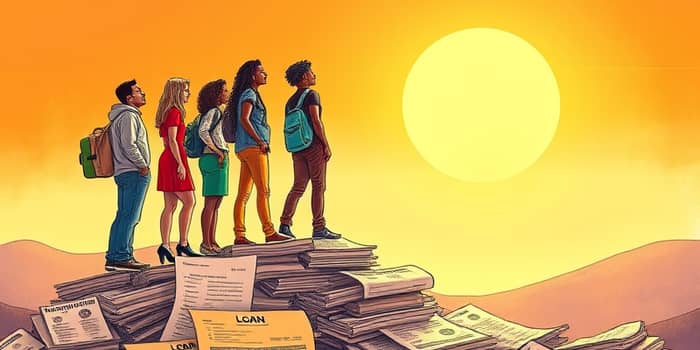
Student loan debt in 2026 has reached historic levels, creating financial stress for millions of borrowers nationwide. With over $1.8 trillion owed, it’s easy to feel overwhelmed. Yet, armed with the right information and strategies, you can transform this burden into a manageable journey toward financial freedom.
This comprehensive guide will equip you with practical tools, inspiring examples, and actionable steps to navigate repayment with confidence and clarity.
Understanding the Current Landscape
In early 2026, federal student loan debt sits between $1.693 and $1.727 trillion, while private obligations add another $167 billion. Roughly 43 million Americans carry these balances, with the average federal debt per borrower climbing above $37,000.
Interest and repayment terms vary widely by degree type. Undergraduates from public universities leave school with about $34,000, while graduate and professional degree holders often exit owing six figures. Younger borrowers, ages 25 to 34, average $33,000 and face a high risk of default, especially those with balances under $40,000.
The impact extends beyond numbers. Nearly one-third of borrowers postpone homeownership, marriage, or parenthood. Despite advances in repayment assistance and forgiveness programs, a lack of awareness and planning allows debt to erode career choices and life milestones.
Crafting a Personalized Repayment Strategy
No two financial journeys are identical. Begin by assessing your income, living expenses, and total student loan balance. From there, develop a plan that reflects your goals—whether that’s rapid payoff, qualification for forgiveness, or minimizing monthly stress.
- Review all federal and private loans: note interest rates and servicers.
- Consolidate or refinance selectively to simplify payments and reduce rates.
- build a solid repayment foundation by setting a realistic budget.
- Choose between standard repayment or income-driven plans based on your cash flow.
- Track payment deadlines rigorously to avoid delinquency and default.
For many, income-driven repayment (IDR) plans such as SAVE, IBR, or REPAYE offer a lifeline by capping monthly payments at a percentage of discretionary income. Undergraduates may see forgiveness after 10–20 years, while graduate borrowers might require up to 25 years of consistent payments.
Maximizing Forgiveness Opportunities
More than 143 federal, state, and employer-based programs exist to help erase student loan debt. While private loans rarely qualify, federal borrowers can unlock powerful forgiveness pathways through targeted service, occupation, or repayment track.
Utilize the official PSLF Help Tool to certify employment and payments. For specialized fields—like healthcare and legal aid—programs such as NHSC or John R. Justice provide targeted relief in exchange for service in underserved communities.
Overcoming Common Obstacles
Misconceptions and administrative hurdles often derail progress. Don’t let myths prevent you from accessing benefits:
- Myth: “My forgiveness applications will be rejected.” Reality
- Myth: “Private loans have no relief options.” Reality
- Myth: “I can’t switch repayment plans.” Reality
Keep detailed records of every payment, request annual statements from servicers, and engage with borrower support groups for accountability. Small lapses can cost thousands in interest and eligibility setbacks.
Looking Ahead: Trends and Advice for 2026 and Beyond
As repayment resumes post-pandemic, loans in active repayment have surged by over 33%. Meanwhile, the Department of Education is streamlining application processes and capping forbearance to nine months over two years. Awareness of these changes positions you to act swiftly.
Federal reforms under the OBBBA promise to lower borrowing costs, but cautious optimism is key. Interest rates remain historically low, but refinancing windows may close if rates rise. Always compare offers and maintain flexibility.
Finally, remember that empower your financial future isn’t just a slogan—it’s an achievable outcome. By integrating proactive planning, leveraging forgiveness programs, and staying informed on policy shifts, you can transform student loan debt from a weight into a stepping stone for success.
Your journey won’t be without challenges, but with clear goals and consistent action, you can conquer your debt and unlock a brighter tomorrow. Start today by drafting your personalized repayment plan and exploring every forgiveness avenue available.
References
- https://www.studentloanplanner.com/student-loan-debt-statistics-average-student-loan-debt/
- https://educationdata.org/student-loan-forgiveness-programs
- https://www.sofi.com/learn/content/student-loan-debt-statistics/
- https://www.credible.com/refinance-student-loans/student-loan-forgiveness-programs
- https://educationdata.org/student-loan-debt-statistics
- https://financialaid.tcnj.edu/update-on-federal-loan-changes-beginning-in-2026/
- https://www.brookings.edu/articles/how-obbba-reshapes-student-lending/
- https://studentaid.gov/manage-loans/forgiveness-cancellation/public-service
- https://newsroom.fidelity.com/pressreleases/fidelity-2026-state-of-student-debt/s/e9bdd85e-328d-43ec-8f65-bf5a97eaaabe
- http://www.ed.gov/about/news/press-release/us-department-of-education-announces-final-rule-public-service-loan-forgiveness-protect-american-taxpayers
- https://www.crfb.org/blogs/student-loan-costs-drop-record-lows-after-reconciliation-reforms
- https://nhsc.hrsa.gov/loan-repayment/nhsc-loan-repayment-program
- https://protectborrowers.org/resource/default-crisis-fact-sheet-jan-2026/
- https://mohela.studentaid.gov/DL/resourceCenter/LoanForgivenessDischarge.aspx
- https://finaid.org/loans/publicservice/