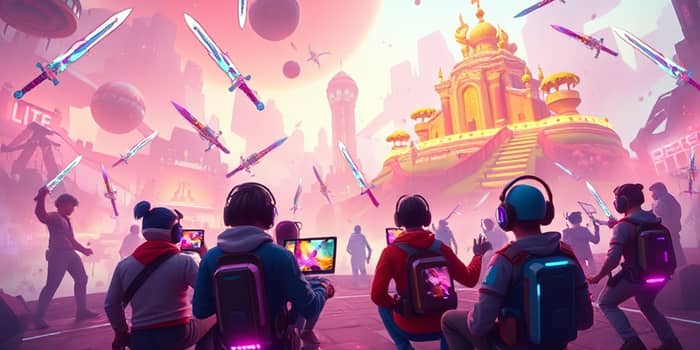
Non-fungible tokens (NFTs) have ushered in a new era for interactive entertainment. In gaming, NFTs serve as revolutionary digital assets that empower players with unique player ownership of in-game items, characters, and virtual real estate.
By embedding blockchain provenance into gameplay, developers and communities are collaborating to transform player experiences and unlock a massive growth potential for both creators and gamers.
Market Overview: Size, Growth, and Discrepancies
The NFT gaming market’s valuation varies widely across research. Some reports estimate the market at USD 5.61-6.1 billion in 2025, while others project figures reaching trillions by 2030. These significant valuation discrepancies reflect diverse methodologies and market assumptions.
Transparency around these projections is essential for investors, developers, and players. Understanding the underlying assumptions can help stakeholders navigate rapid expansion and potential volatility in the coming years.
Types of Gaming NFTs and Their Roles
Gaming NFTs come in a variety of formats, each serving distinct functions within virtual worlds. Their classification helps shape development priorities and player engagement strategies.
- In-Game Assets: Weapons, armor, skins, avatars
- Collectibles and trading cards
- Virtual real estate and metaverse properties
- Power-ups, boosts, and special abilities
- Cryptocurrency tokens and governance NFTs
Beyond basic categorization, sub-segments such as skins versus functional items reveal player preferences. Some gamers collect rare designs, while others invest in assets that yield gameplay advantages or financial returns.
As utility NFTs grow, developers are designing levels, maps, and modular game elements that players can own, trade, and integrate into new experiences.
Geographic Landscape: Regional Leaders
Global adoption of NFT gaming varies by region. North America leads due to robust technology infrastructure, a large base of digital enthusiasts, and extensive venture capital for blockchain startups.
Europe blends a rich gaming heritage with increasing blockchain integrations. The UK, Germany, and France are hotspots for independent studios exploring tokenized collectibles and on-chain marketplaces.
The Asia-Pacific region boasts the fastest growth trajectory. Countries like South Korea, Japan, and China drive mobile-first NFT gaming, with players earning real value through play-to-earn mechanics. India’s 13.5% NFT ownership rate highlights its rising influence in global digital asset adoption.
Economic Model Transformation
The introduction of NFTs is redefining in-game economies. Traditional pay-to-play structures are giving way to models where players truly own assets and can monetize time spent gaming.
- Play-to-Earn Revolution: Players earn tokens and NFTs through gameplay.
- Secondary Markets: In-game marketplaces facilitate peer-to-peer trading.
- DeFi Integration: Lending, staking, and yield farming expand revenue streams.
- Metaverse Commerce: Cross-game interoperability offers unified asset use.
- Sustainable Networks: Eco-friendly blockchains reduce environmental impact.
These shifts incentivize long-term engagement and loyalty. As ecosystems mature, developers must balance tokenomics and accessibility to sustain vibrant player-driven markets.
Technology and Infrastructure
Ethereum currently dominates NFT gaming, hosting over 62% of contracts. However, alternative blockchains such as Solana, WEMIX, and Polygon are gaining traction due to lower fees and faster transaction speeds.
Developers are also exploring layer-2 solutions and sidechains to enhance scalability. Sustainable blockchain networks are becoming a focal point, addressing environmental concerns raised by energy-intensive consensus mechanisms.
In-game NFT marketplaces are evolving with advanced smart contracts that support fractional ownership, royalties, and programmable scarcity. These features offer dynamic revenue models for creators and more seamless experiences for users.
Key Trends Shaping the Future
The convergence of emerging technologies is set to propel NFT gaming to new heights. The following trends are particularly influential:
AI-Powered NFTs will account for over 30% of new projects by 2026, enabling digital assets to evolve, level up, or adapt based on player interactions.
Metaverse integration is forging interconnected virtual realms, where assets and avatars traverse multiple environments, enhancing engagement and discovery.
Cross-Platform Interoperability is increasingly demanded by players, pushing developers to adopt standardized protocols for asset portability.
Regulatory clarity is gradually emerging, offering a firmer foundation for financial innovation and player protection in decentralized gaming economies.
Industry Leaders and Partnerships
Key players shaping NFT gaming include Sky Mavis, Decentraland, Animoca Brands, Dapper Labs, Solana, and Illuvium Labs. These companies are pioneering platforms that blend immersive experiences with blockchain mechanics.
Notable collaborations have accelerated ecosystem growth. In 2022, MetaverseGo launched a mobile app requiring only a phone number to access NFT games, streamlining adoption. In early 2023, NFT Technologies Inc. partnered with Run It Wild and Sandbox to onboard new creators and expand interoperable worlds.
Challenges and Future Outlook
Despite rapid innovation, challenges persist. Cloud gaming services threaten to centralize experiences, competing with decentralized models. Scalability remains a hurdle, as high transaction volumes can lead to network congestion and elevated fees.
Developers and communities must collaborate to foster inclusive, secure environments. As regulatory frameworks solidify, clear guidelines will help mitigate risk and bolster consumer confidence.
For gamers, creators, and investors, now is the moment to embrace this emerging frontier. By staying informed, exploring cross-chain opportunities, and participating in governance, stakeholders can shape a vibrant, player-driven future for gaming and NFTs.
The revolution of in-game economies is underway, and every participant has a role in defining the next chapter of interactive entertainment.
References
- https://www.fortunebusinessinsights.com/nft-gaming-market-111345
- https://www.datainsightsmarket.com/reports/nft-game-1986251
- https://www.researchandmarkets.com/reports/6104631/non-fungible-token-nft-gaming-market-report
- https://www.globenewswire.com/news-release/2025/12/11/3204147/28124/en/NFT-Gaming-Market-Share-Analysis-Industry-Trends-Statistics-Growth-Forecasts-2025-2030.html
- https://colexion.io/nft/market-size-trends/
- https://www.marketreportsworld.com/market-reports/play-to-earn-nft-games-market-14722106
- https://www.fundamentalbusinessinsights.com/industry-report/gaming-nft-market-20479
- https://www.insightaceanalytic.com/report/non-fungible-token-nft-market/2706
- https://www.thebusinessresearchcompany.com/report/non-fungible-token-global-market-report