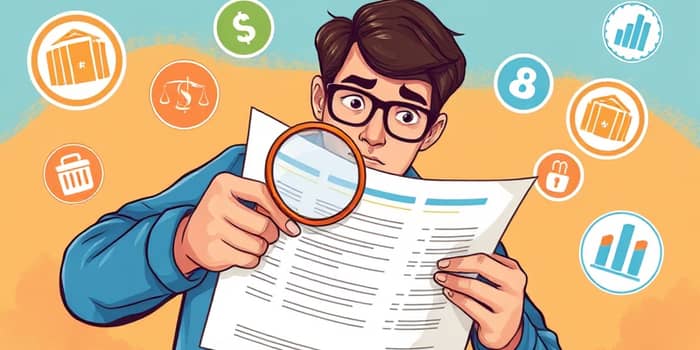
Facing errors on your credit report can feel overwhelming, but understanding how to challenge inaccuracies is within reach. This guide will walk you through every stage of the process, from spotting mistakes to escalating unresolved issues, equipping you with practical dispute strategies and boosting your confidence in managing your financial reputation.
Understanding Your Credit Reports and Common Errors
Each major credit bureau—Equifax, Experian, and TransUnion—compiles a report that lenders use to assess your creditworthiness. Unfortunately, these reports often contain mistakes that drag down your score. Recognizing these errors early is crucial to maintaining strong financial health.
Errors typically fall into several categories. Some are simple typos, while others can be more damaging entries you never authorized. By learning the most frequent mistakes, you’ll know exactly what to look for during your review.
- Inaccurate personal information: Name, address, or Social Security number typos;
- Wrong account details: Incorrect balances, late payments, or account statuses;
- Fraudulent or unrecognized accounts: Identity theft or mixed files;
- Outdated negative information: Items older than seven years that should be removed.
Legal Rights and Timelines Under the FCRA
The Fair Credit Reporting Act (FCRA) gives you powerful protections. Under this law, credit bureaus must investigate your dispute reasonably and free of charge. Furnishers—your creditors or lenders—must also verify any challenged data.
Once you file a dispute, strict timelines kick in. Knowing these deadlines helps you hold bureaus accountable and track the progress of your request.
This table outlines the core deadlines you’ll encounter. Keep these dates in a calendar or spreadsheet to ensure timely follow-up if the bureau misses its obligations.
Identifying Errors and Gathering Supporting Evidence
Before submitting a dispute, you need a complete, well-documented case. The clearer and more specific you are, the less likely your dispute will be deemed frivolous or irrelevant by the bureau.
Start by ordering your free credit reports from AnnualCreditReport.com. Review each section carefully, noting any inconsistencies. Once you’ve flagged potential errors, collect documents that prove your case:
Examples of supporting evidence: pay stubs showing on-time payments, bank statements reflecting correct balances, letters from creditors confirming account closures, or identity theft affidavits.
Step-by-Step Guide to Filing a Dispute
- Get Your Reports: Access all three bureaus via AnnualCreditReport.com.
- Document Errors: Circle inaccuracies and write detailed notes.
- Gather Copies: Use clear photocopies of IDs, statements, and correspondence.
- Submit to Bureaus: File online, by phone, or via certified mail (recommended for proof of delivery).
- Include Dispute Details: Your contact info, report ID, error description, and request for correction.
- Send to Furnishers: Optional but increases success—mail to original creditor’s dispute address.
- Track Everything: Keep copies of all letters, tracking numbers, and dates.
Certified mail preserves rights and creates a verifiable record. If you choose online, print confirmation pages and emails.
What Happens After You File a Dispute
Once your dispute is received, bureaus typically process it through an automated system that can deliver a preliminary decision in 5-10 minutes. However, lenders have up to 30 days to fully investigate.
If the furnisher cannot verify the accuracy of an item, it must be removed. If it is deemed accurate, the entry remains, but you can add a 100-word consumer statement to your report. While this note doesn’t boost your score, it alerts future manual reviewers to your sided perspective.
After the investigation, you’ll receive a written notice detailing the results. If corrections were made, bureaus must send you a free updated report.
Escalation Options and Advanced Strategies
Not satisfied with the outcome? You have several escalation paths:
- Re-dispute with more precise documentation or new evidence;
- File a complaint with the Consumer Financial Protection Bureau (CFPB) or your state attorney general;
- Seek help from a consumer law attorney—many offer free initial consultations;
- If your dispute was labeled frivolous, provide additional specifics to counter that ruling.
Persistence is key. The more thorough your submissions, the harder it is for bureaus or furnishers to ignore your claims.
Practical Tips for Beginners
When you’re just starting, small habits can make a big difference in the dispute process. Here are some suggestions to keep you organized and proactive:
- Dispute each bureau separately for maximum effect.
- Avoid sending original documents; use clear copies instead.
- Time your disputes at least 3–6 months before applying for major credit.
- Use certified mail for paper disputes to preserve proof of receipt.
- Review your full file again after resolution to confirm all changes.
- Keep a dispute journal to track every call and correspondence.
By following these foundational beginning strategies, you’ll navigate the process more confidently and effectively. What may seem like a bureaucratic maze can become a clear path to a cleaner credit profile with the right approach and persistence.
Challenging errors on your credit reports doesn’t have to be intimidating. Armed with knowledge of your rights under the FCRA, well-organized evidence, and a clear plan of action, you can correct inaccuracies and bolster your financial standing. Start reviewing your reports today and take the first step toward credit health that truly reflects your responsible behavior.
References
- https://consumer.ftc.gov/articles/disputing-errors-your-credit-reports
- https://workmoney.org/money-tips/credit-101/how-long-does-a-credit-dispute-take-the-real-timeline-explained
- https://flabizlaw.org/member-articles/how-to-write-a-dispute-letter-to-credit-bureaus/
- https://raburnkaufman.com/blog/how-long-does-a-credit-dispute-take/
- https://www.cdiaonline.org/for-consumers/how-to-dispute-an-error/
- https://www.experian.com/blogs/ask-experian/how-long-does-it-take-to-complete-the-dispute-process/
- https://www.consumerfinance.gov/ask-cfpb/how-do-i-dispute-an-error-on-my-credit-report-en-314/
- https://consumerprotection.net/how-long-do-credit-reporting-disputes-take/
- https://www.annualcreditreport.com/filingADispute.action
- https://www.lendingtree.com/credit-repair/when-will-removed-credit-report-errors-help-my-credit/
- https://www.equifax.com/personal/credit-report-services/credit-dispute/
- https://www.experian.com/help/dispute-credit/
- https://www.usa.gov/credit-report-errors
- https://texaslawhelp.org/article/how-to-dispute-errors-in-a-credit-report