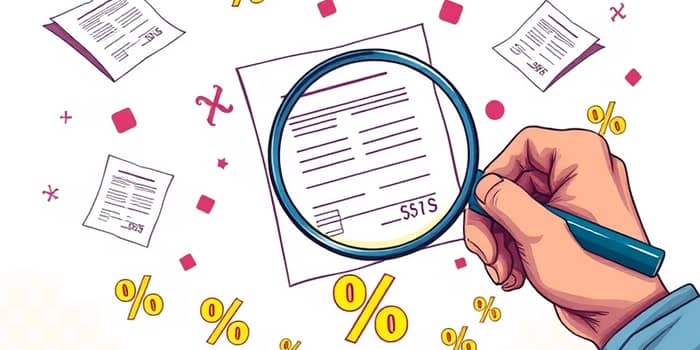
Whether you're eyeing a new home, financing a car, or tapping into credit for everyday expenses, the offer that catches your eye is often the APR. But what you see isn't always what you pay. Many hidden charges lie beyond that percentage, ready to inflate your total outlay. In this guide, we pull back the curtain on APR calculations, fees that escape disclosure, and the tactics you can deploy to truly understand borrowing's real cost.
Armed with practical tips and clear examples, you'll learn how to avoid surprises and seize control of your financial journey.
Breaking Down the APR Illusion
APR, or Annual Percentage Rate, is meant to express the total yearly cost of borrowing in a single figure. It combines an interest rate with some fees—like origination or points—but omits variable or discretionary charges. Depending on the calculation method, lenders may spread fees across the full term, masking the spike in effective rates if you pay early or encounter unlisted costs.
Two common calculation methods—actuarial and the U.S. Rule—allow tolerances that let lenders understate the truth. For example, irregular payments may carry a 0.25% tolerance, or loans with fluctuating balances can understate by 8%. When fees aren’t fully rolled into APR or are excluded entirely, you fail to uncover hidden fees and charges that swell costs over time.
Myths and Realities of Borrowing Costs
In the world of loans, myths spread easily. You might believe that low advertised APRs shield you from extra payments, or assume that early repayment always saves money. In truth, prepayment can spike your effective rate because fees amortized over the full term suddenly weigh heavier on remaining balances. Imagine paying a 30-year mortgage but settling at 15 years—the same closing fees suddenly power a higher percentage of your shorter schedule.
Credit cards, payday loans, personal lines of credit and auto financings all use APR labels. Yet the true cost varies widely:
- APR includes every fee is a myth; many junk fees remain hidden.
- short-term payday loans misrepresented APRs, often capped to protect or restrict supply.
- Introductory or penalty rates can flip costs overnight if you miss a payment.
- Comparing rates without considering term length and fee timing sets you up for surprises.
Types of APR: A Comparative Table
Different loans use different APR structures. Reviewing them side by side will help you pick terms that align with your budget.
Strategies to Master Your True Borrowing Cost
Awareness is your first line of defense. Beyond reading the APR, adopt these tactics to shield your wallet:
- Check your credit and boost your credit score strategically before applying.
- Negotiate or shop away fees: even small origination costs add up.
- compare annual percentage rates yourself and add in expected fees.
- Choose shorter terms when possible to reduce long-term interest.
- Consider refinancing high-APR balances into fixed-rate products.
- Always read the fine print for prepayment penalties.
Navigating Regulations and Caps
State and federal laws can place caps on maximum APRs, but these limits vary by loan size and borrower category. For example, many states cap small-dollar loans under $500 at 36% APR, while larger borrowings may see tighter or looser thresholds. The Military Lending Act enforces a 36% cap for military members nationwide, shielding them from predatory rates. Proposed federal reforms aim to extend caps to more Americans, but critics warn of reduced access for those with limited credit.
Understanding local usury laws and federal protections empowers you to recognize violations. When lenders advertise rates above established caps, you may have legal recourse. Regulators seldom police every fee or calculation nuance, so staying informed is essential to defending your rights.
Empowering Your Financial Journey
Borrowing wisely means looking beyond the surface. By dissecting APR components, identifying omitted fees, and applying strategic borrowing tactics, you take control of your financial destiny. Monitor payment schedules, challenge unexpected charges, and refine your credit profile. These steps transform debt from a burden into a manageable tool that fuels opportunity.
Remember, the true cost of borrowing isn't just a number—it reflects decisions made today that influence tomorrow. Armed with knowledge and proactive strategies, you can navigate loans with confidence and clarity, ensuring every percentage point works in your favor.
References
- https://en.wikipedia.org/wiki/Annual_percentage_rate
- https://www.nclc.org/resources/fact-sheet-state-annual-percentage-rate-apr-caps-for-500-2000-and-10000-installment-loans/
- https://www.jvmlending.com/blog/apr-annual-percentage-rate-the-true-cost-of-borrowing/
- https://www.consumerfinance.gov/rules-policy/regulations/1026/22
- https://www.achieve.com/learn/personal-loans/what-is-apr
- https://www.experian.co.uk/consumer/credit-cards/guides/apr.html
- https://www.bankrate.com/credit-cards/zero-interest/does-law-cap-credit-card-interest-rates/
- https://www.congress.gov/crs-product/IF12861
- https://www.urban.org/urban-wire/trumps-proposed-credit-card-interest-rate-cap-could-affect-more-160-million-americans